


അജന്ത ഗുഹകള്
text_fields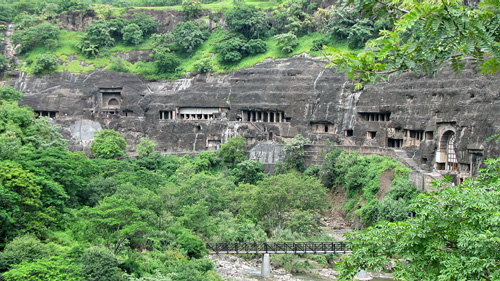
The Ajanta Caves in Aurangabad district of Maharashtra, India are about 30 rock-cut Buddhist cave monuments which date from the 2nd century. The caves include paintings and sculptures that has millions of stories to tell. They are masterpieces of Buddhist religious art, with figures of the Buddha and depictions of the Jataka tales.
The caves were built in two phases starting around the 2nd century BCE, with the second group of caves built around 400–650 CE according to older accounts. The site is a protected monument in the care of the Archaeological Survey of India and since 1983, the Ajanta Caves have been a UNESCO World Heritage Site.
The Ajanta caves are cut into the side of a cliff that is on the south side of a U-shaped gorge on the small river Waghora (or Wagura). The area was previously heavily forested, and after the site ceased to be used the caves were covered by jungle until accidentally rediscovered in 1819 by a British officer on a hunting party. The caves are numbered 1 to 28 according to their place along the path, beginning at the entrance. The architectural carving in many caves are very rare, and the style of the many figure sculptures is a highly local one.
The caves are located near Jalgaon and just outside the village of Ajinṭhā about 59 kilometres from Jalgaon railway station on the Delhi - Mumbai line and Howrah-Nagpur-Mumbai line of the Central Railway zone, and 104 kilometres from the city of Aurangabad. 100 kilometres from the Ellora Caves, which contain Hindu and Jain temples as well as Buddhist caves.

Don't miss the exclusive news, Stay updated
Subscribe to our Newsletter
By subscribing you agree to our Terms & Conditions.